
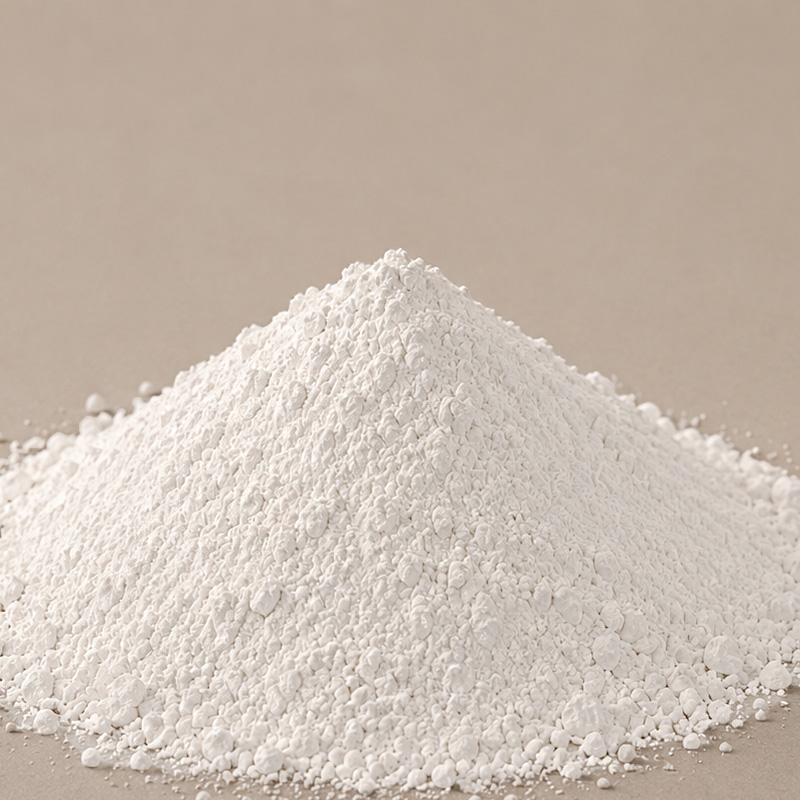
Calcined Kaolin
Calcined Kaolin is a refined white mineral produced by heating natural kaolin clay to high temperatures, a process that removes chemically bound water and alters the crystal structure to produce a harder, more inert, and highly opacifying material. The calcination process results in a product with superior whiteness, brightness, and opacity compared to unprocessed kaolin, making it a valued functional filler and extender across a wide range of industries.
Applications:
Calcined kaolin is most extensively used in the paints and coatings industry as a partial replacement for titanium dioxide, where its high opacity, brightness, and low oil absorption contribute to improved hiding power and reduced formulation costs. In the plastics and rubber industry, it serves as a functional filler that improves stiffness, dimensional stability, electrical resistivity, and surface finish in PVC, polyolefins, and rubber compounds. The wire and cable industry utilizes calcined kaolin for its excellent electrical insulation properties and ability to improve the mechanical strength and fire resistance of cable jacketing compounds. In paper and board manufacturing, it is used as a coating and filling pigment to improve smoothness, printability, brightness, and opacity of paper surfaces. The ceramics industry incorporates calcined kaolin in the production of porcelain, technical ceramics, and refractory materials where high-temperature stability and whiteness are essential. It is also used in adhesives and sealants as a reinforcing filler that improves viscosity control, adhesion, and mechanical performance.