
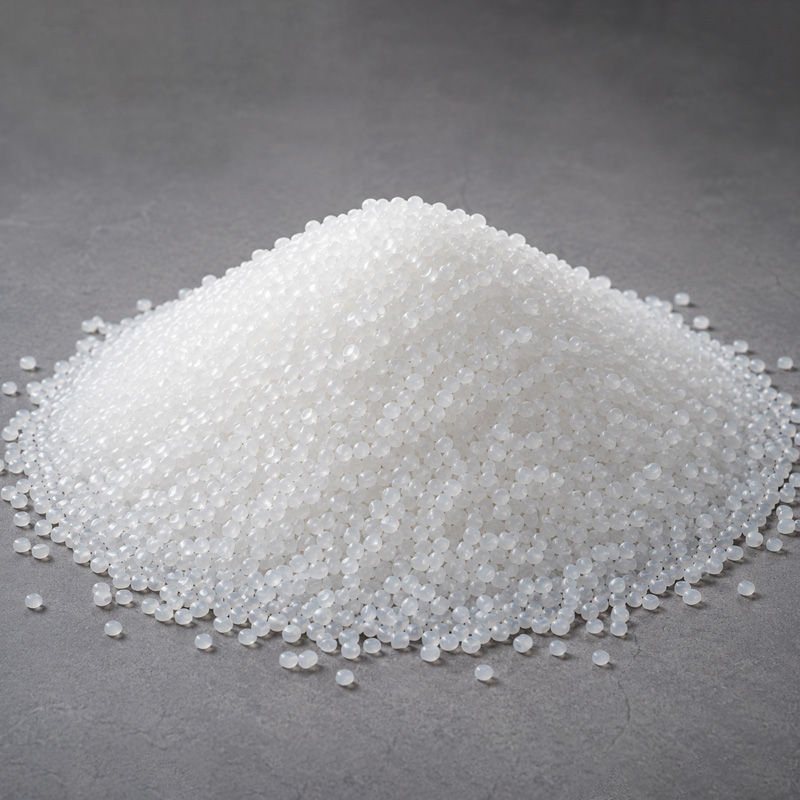
HDPE (High-Density Polyethylene)
HDPE (High-Density Polyethylene) is a versatile, semi-crystalline thermoplastic polymer known for its high strength-to-density ratio, excellent chemical resistance, and durability. Produced through the polymerization of ethylene at low pressure using catalysts, HDPE has a linear molecular structure with minimal branching, resulting in a denser and stronger material compared to other polyethylene grades. It is one of the most widely used plastics globally, valued for its toughness, moisture resistance, and ease of processing across a broad range of industrial and consumer applications.
Applications:
HDPE is most extensively used in the pipe and fittings industry, where it serves as the material of choice for water supply, gas distribution, sewage, and industrial fluid conveyance systems due to its excellent pressure resistance, corrosion resistance, and long service life. In the packaging industry, HDPE is widely used in the production of bottles, containers, crates, and caps for household chemicals, personal care products, and industrial goods. The construction industry relies on HDPE for geomembranes, drainage pipes, conduits, and protective sheeting due to its UV resistance and dimensional stability. In agriculture, HDPE is used in irrigation pipes, water tanks, and greenhouse films where durability and chemical resistance to fertilizers and pesticides are critical. The automotive industry uses HDPE in fuel tanks, fluid reservoirs, and under-hood components where resistance to chemicals and impact is required. It is also widely used in the wire and cable industry as a protective conduit and jacketing material, and in industrial applications for manufacturing drums, pallets, material handling equipment, and chemical storage tanks.